


Independent Roof Inspector for Commercial Property — What It Means and Why It Matters
The term "independent roof inspector" is used widely in the Australian roofing industry. It appears in the marketing of inspection firms, roofing contractors, and building consultants of every description. In some cases it accurately describes the service being offered. In many cases it does not. For strata managers, facilities managers, and asset managers commissioning roof condition reports on commercial buildings, the difference between a genuinely independent roof inspector and one who uses the language of independence while maintaining financial ties to the repair industry has direct consequences — for the accuracy of the findings, the reliability of the recommended scope of works, and the legal defensibility of the decisions made on the basis of those findings.
Insight RI is a specialist independent roof inspector operating across NSW and Queensland. We carry out no repairs, hold no contractor relationships, and receive no commissions from any third party. This page explains what genuine independence means in practice, why it matters for commercial property management, and what questions to ask before engaging any inspector who claims to be independent.
What "Independent Roof Inspector" Actually Means
In a commercial property context, an independent roof inspector is an inspector whose findings are not influenced by any financial interest in the outcome of the inspection. That definition has two components, and both matter.
The first is structural independence — the business model. A genuinely independent roof inspector operates a business that earns its income entirely from inspection fees. There is no repair division, no product supply arm, no referral arrangement with contractors, and no other revenue stream that depends on the inspector identifying work. The inspection is the service, not the lead generation tool for a more profitable service.
The second is commercial independence — the specific engagement. Even an inspector whose business model is structurally independent can have a conflict of interest in a specific engagement if they have an existing relationship with a contractor who may be engaged to carry out the recommended works, or if they are being paid by a party whose interests are not aligned with an accurate assessment.
Most of the conflict of interest problems in the commercial roofing inspection industry arise from structural independence failures — inspectors who are affiliated with repair businesses, or who receive consideration from contractors for referrals. These conflicts are rarely disclosed proactively. They are the norm rather than the exception in a market where the majority of "roof inspections" are carried out by companies whose primary business is repair and maintenance.


Why Genuine Independence Matters for Commercial Property Managers
For a homeowner commissioning a single residential roof inspection, the consequences of a biased assessment are limited. An inflated repair scope costs money. It is frustrating, but the financial exposure is bounded.
For a commercial property manager, the stakes are materially different across every dimension.
Financial scale — A commercial roof inspection report that overstates the urgency or scope of required works can generate repair recommendations worth tens or hundreds of thousands of dollars. For a strata committee or body corporate authorising that expenditure on the basis of a contractor's own assessment, the financial consequences of a biased report are significant. For an asset manager procuring works across a multi-property portfolio, they are substantial.
Governance obligations — Strata managers and body corporate committees in both Queensland and NSW operate under legislative frameworks — the Body Corporate and Community Management Act 1997 (Qld) and the Strata Schemes Management Act 2015 (NSW) — that impose specific obligations around building maintenance and the basis on which maintenance decisions are made. Authorising significant maintenance expenditure on the basis of a contractor's own assessment, rather than an independent technical report, leaves committee members personally exposed if those decisions are later challenged by owners.
Contractor procurement — A scope of works produced by a repair contractor reflects that contractor's preferred methods, materials, and margin. Taking a contractor-produced scope to the open market for competitive quotes does not produce genuinely competitive procurement — it produces quotes against a brief shaped by one company's commercial interest. An independent scope of works, produced by an inspector with no financial interest in the outcome, is the only document that gives you a genuinely neutral basis for contractor procurement.
Legal and insurance contexts — Insurance claims, defect liability proceedings, QCAT disputes, and property transactions all require technical evidence that can withstand scrutiny. A report prepared by an inspector with a financial interest in the outcome carries significantly less weight in these contexts than a report prepared by a genuinely independent inspector. For loss adjusters, property lawyers, and strata managers managing contested maintenance disputes, the independence of the inspector is not a secondary consideration — it is fundamental to the evidentiary value of the report.

The Difference Between an Independent Roof Inspector and a Roofing Contractor
The distinction between an independent roof inspector and a roofing contractor offering roof inspection services is not subtle — but it is frequently obscured by marketing language that uses the word "independent" to describe services that are structurally dependent on the repair work that inspections generate.
A roofing contractor who offers roof inspections — whether free or paid — is in the business of selling roof repairs and maintenance. The inspection is how they identify repair opportunities. Their assessment of your roof's condition is filtered, consciously or not, through the question of what work their business can be engaged to carry out. A contractor who inspects a commercial roof and finds nothing that requires urgent attention earns nothing from that engagement. The financial incentive runs in one direction only.
An independent roof inspector — a genuine one — earns the same fee regardless of what the inspection finds. A roof in excellent condition generates the same revenue as a roof with significant defects. There is no financial incentive to overstate urgency, inflate scope, or recommend full system replacement where targeted maintenance would be appropriate. The only incentive is to provide an accurate technical roof condition assessment, because accuracy is the basis on which the business builds its reputation and generates repeat work from property managers who rely on the findings.
That structural difference is why the reports produced by genuinely independent roof inspectors are more useful to property managers, more defensible in formal proceedings, and more reliable as a basis for procurement than assessments produced by companies with a financial interest in the outcome.
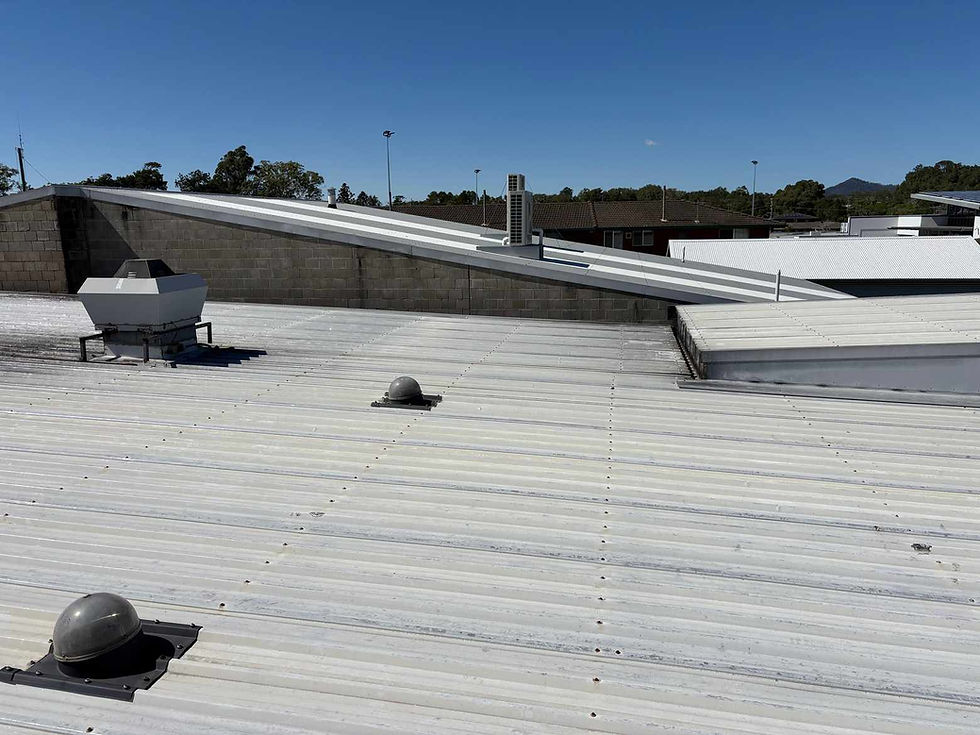
How to Verify That a Roof Inspector Is Genuinely Independent
Independence is a verifiable characteristic, not a marketing claim. Before engaging any inspector who describes themselves as independent, the following questions establish whether the description is accurate.
Does the company carry out roof repairs or maintenance works of any kind? This is the definitive question. A company that inspects roofs and also repairs them cannot be genuinely independent — the conflict of interest is structural and cannot be managed away by internal procedures or declarations of intent. The only acceptable answer from a genuinely independent inspector is an unqualified no.
Does the company receive referral fees, commissions, or any other consideration from contractors? Some roof inspection companies refer clients to repair contractors and receive financial consideration for those referrals. This arrangement is not always disclosed. It creates a direct financial incentive to find defects that justify referrals — and to direct clients toward the contractors paying the highest commissions rather than those offering the best value. Ask directly and expect an unqualified no.
Does the company sell roofing products or materials? Product supply relationships create financial incentives to recommend the products the company sells or distributes. An independent inspector has no product relationships of any kind.
Is the inspector licensed for commercial building inspection work in the relevant state? In Queensland, the relevant licence is a QBCC licence. In NSW, it is a NSW Building Commission licence. Verify the licence number against the relevant state register. An unlicensed inspector operating under a general trade licence or residential inspection licence is not authorised to carry out commercial building inspection work in these states, and their reports may not be accepted for insurance, legal, or regulatory purposes.
Does the company carry professional indemnity insurance? Professional indemnity insurance is the financial backstop that gives a report its evidentiary weight in insurance and legal contexts. Any genuinely independent commercial roof inspector should carry it as a matter of course and be able to produce a certificate of currency on request.
Insight RI — A Genuinely Independent Roof Inspector
Insight RI is a specialist independent roof inspector operating across NSW and Queensland. Our business model is simple: we carry out independent commercial roof inspections, produce technically rigorous reports, and charge a fee for that service. We do nothing else.
We carry out no repairs. We hold no contractor relationships. We receive no referral fees or commissions from any third party. Glen Carter, the founder and principal inspector, holds a QBCC licence (Lic. 725919) and NSW Building Commission licence (Lic. 491171C) and has over 20 years of field experience across commercial, industrial, and strata roof inspections throughout NSW and Queensland.
Every Insight RI inspection report includes a full photographic defect register cross-referenced to the written observations, Australian Standards references for every non-compliant finding, a Scope of Works structured for contractor procurement, indicative cost estimates, and an executive summary suitable for strata committee or board reporting. Reports are delivered within five business days of inspection. Urgent findings are communicated immediately.
We work exclusively with commercial property professionals — strata managers, facilities managers, asset managers, property lawyers, and building owners. Every report we produce is structured for the commercial property management context: the governance obligations, the reporting requirements, the contractor procurement processes, and the legal and insurance frameworks our clients operate within.
For location-specific information, see our pages for commercial roof inspector Sydney, commercial roof inspector Brisbane, commercial roof inspector Gold Coast, and commercial roof inspector Sunshine Coast. For a full overview of what our reports contain, see our roof inspection report page.

Frequently Asked Questions — Independent Roof Inspector
How do I know if a roof inspector is genuinely independent? Ask three questions: Does the company carry out repairs? Does it receive referral fees from contractors? Does it sell roofing products? A genuinely independent inspector answers no to all three without qualification. Also verify the inspector holds the relevant state licence — QBCC in Queensland, NSW Building Commission licence in NSW — and carries professional indemnity insurance.
Is a free roof inspection from a roofing contractor an independent inspection? No. A free inspection from a contractor who also carries out repairs is a lead generation exercise, not an independent technical assessment. The findings are shaped by the contractor's financial interest in identifying repair work. It has value as a quoting exercise but should not be treated as an independent condition record for governance, insurance, or procurement purposes.
Do independent roof inspectors cost more than contractor assessments? A genuinely independent roof inspection service involves a fee that a contractor-offered free assessment does not. That fee buys you an unbiased technical assessment that can be used for procurement, governance reporting, insurance claims, and legal proceedings — and that protects you from the cost of unnecessary repair works recommended by an inspector with a financial interest in the outcome. For most commercial property managers, the fee is a fraction of the cost of a single unnecessary repair scope.
Can an independent roof inspector's report be used in legal proceedings? Yes, provided the inspector is licensed, carries professional indemnity insurance, and has no financial interest in the outcome. Insight RI reports are structured specifically to be technically defensible in QCAT proceedings, insurance claim processes, and property law disputes. Reports prepared by inspectors with conflicts of interest carry significantly reduced evidentiary weight in formal proceedings.
What does an independent roof inspection report include? Every Insight RI report includes a full photographic defect register, defect classifications by priority, Australian Standards references for non-compliant findings, a Scope of Works for rectification, indicative cost estimates, drainage assessment, height safety compliance observations, and an executive summary. See our roof inspection report page for a full breakdown.
Do you inspect all commercial roof types? Yes. Metal deck, klip-lok, Colorbond, liquid-applied membrane, torch-on and modified bitumen, built-up systems, tile, and combination systems. Each roof type is assessed against the relevant Australian Standards and manufacturer installation requirements.
Where do you operate as an independent roof inspector? Across NSW and Queensland. Our primary markets are Sydney, Brisbane, Gold Coast, Sunshine Coast, and Newcastle. We also travel for portfolio inspection programs and can discuss scheduling for other locations. Contact us to discuss your specific requirements.
Insight RI provides genuinely independent roof inspection services for commercial property across NSW and Queensland — with no repair arm, no contractor relationships, and no financial interest in the outcome beyond delivering an accurate assessment you can rely on.
If you manage commercial property and need an independent roof inspector you can trust, contact Insight RI for a fee proposal.