top of page


COMMERCIAL ROOF INSPECTION CASE STUDIES
CASE STUDY 1: LARGE SECONDARY SCHOOL CAMPUS
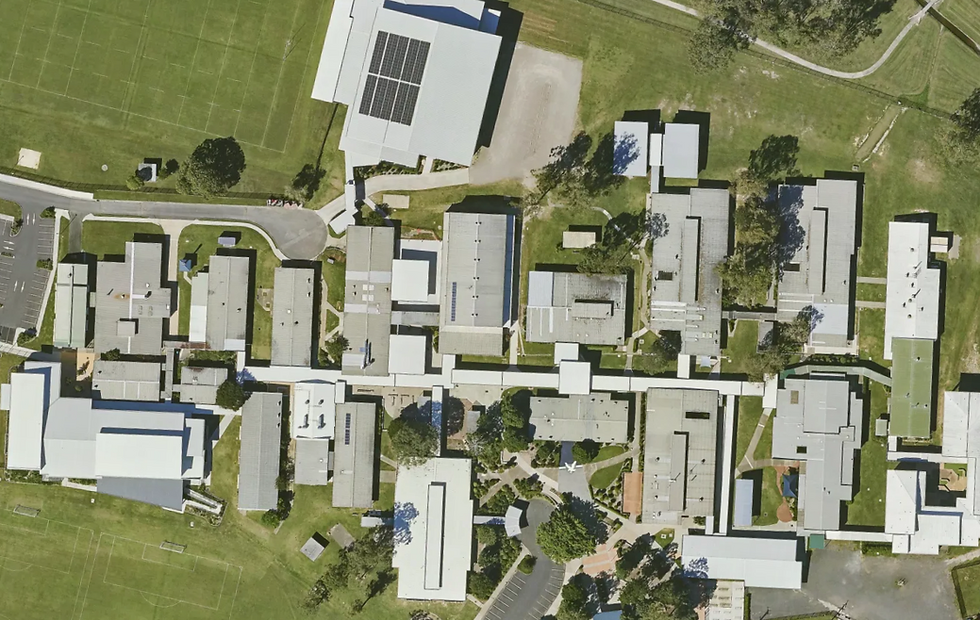
Comprehensive Roof Condition Assessment — Multi-Building Site
Property Type: Large Secondary School — Multi-Building Campus Location: North Brisbane, Queensland Overall Roof Rating: 4/10
The Situation
Managing a large, ageing building portfolio means roofing issues rarely announce themselves until they become expensive problems. For the facilities team responsible for this campus, the roofing system across all buildings had been in service for approximately 30 years — and without a current, independent condition assessment, the true extent of deterioration was unknown.
We were engaged to carry out a comprehensive inspection across every building on the site, covering all roof areas, penetrations, guttering, flashings, and height safety provisions. The goal was to give the facilities team a clear, evidence-based picture of what they were dealing with — and a prioritized framework for addressing it.
What We Found
Our independent roof inspection returned an overall roof rating of 4 out of 10. The findings confirmed what deferred maintenance often produces: a system where multiple failure modes are occurring simultaneously, and where inaction on lower-priority issues had already allowed some to escalate into immediate risks.
Active Water Ingress Risks
Several areas were identified as requiring immediate rectification. Roof sheeting had rusted through entirely in places, penetration flashings on two buildings had open gaps allowing water entry, and Dektites across the site were cracked, perished, or missing. Left unaddressed, each of these represented a direct and ongoing liability.
Widespread Corrosion and Material Failure
Over 886 square metres of roof sheeting was affected by surface corrosion — the result of age, poor drainage, and metal swarf contamination from previous maintenance works that had never been properly cleaned up. A further 250 square metres at roof junctions had developed friction-related corrosion from two lapping roof planes rubbing against each other, an issue that had already created a known leak zone.
Penetration System Failures
Approximately 640 linear metres of dry pan flashings and 109 rubber collar flashings were required across the site to bring the penetration system to a compliant and weatherproof standard. This is the kind of accumulated shortfall that builds quietly over years of reactive-only maintenance.
Guttering Non-Compliance
Roughly 280 linear metres of guttering was found to be non-compliant with Australian Standard HB 39:2015 Section 5.6 (g), which requires a minimum 50mm roof sheet projection over the back edge of the gutter. In some areas this was as low as 20–30mm — a defect that had likely existed since installation and was contributing to ongoing water management failures across the site. Additional issues included blocked and debris-filled gutters, corroded brackets, sagging runs, and one missing downpipe.
27 Skylights and Roof Vents Beyond Serviceable Life
Skylights across multiple buildings were cracked, corroded, or heavily degraded. A further 40 square metres of clear-light sheeting was UV-degraded and no longer weather-resistant. These are the kinds of components that tend to be overlooked until they fail completely.
Height Safety — Zero Compliance
No safety anchor points or compliant ladder access systems were present on any roof area across the entire campus. This is a serious liability exposure for any organisation responsible for the site. No roof maintenance works should be undertaken until a certified height safety specialist has assessed the site and a compliant system is installed.
Why This Matters for Asset and Facilities Managers
A roofing system rated at 4 out of 10 across a multi-building campus is not simply a maintenance issue — it is a capital planning issue, a liability issue, and an operational risk. Water ingress damages interiors, disrupts occupants, accelerates structural deterioration, and drives up insurance costs. Non-compliant height safety provisions expose the responsible party to significant WHS liability.
Without an independent roof inspection report, these risks are invisible. They don't appear on a balance sheet until something fails — at which point the cost of reactive repair is typically far greater than the cost of planned remediation would have been.
What We Delivered
Our report gave the client a complete, independently verified record of the roofing system's condition across every building on the campus. Every finding was supported by photographic evidence and precise measurements. Issues were clearly categorized by urgency — distinguishing between items requiring immediate rectification, those needing attention in the near term, and longer-term capital replacement items.
This gave the facilities team exactly what they needed to brief contractors, seek accurate quotes, stage works within budget cycles, and demonstrate due diligence in their management of the asset.
With 306 photographs, detailed roof maps, building-by-building findings, and a fully certified roof inspection report, the client had a permanent, defensible record of the site's condition — and a clear roadmap for bringing it up to standard.
If you manage a portfolio of buildings and don't have a current, independent roof condition assessment on file, you may be carrying more risk than you realize. Contact us to discuss how we can help.

CASE STUDY 2: LARGE COMMERCIAL FACILITY - POST COMPLETION INSPECTION
Post-Completion Roof Inspection — Widespread Systemic Defects
Property Type: Multi-Tenancy Commercial
Location: South Brisbane, Queensland
Overall Roof Rating: 4/10

The Situation
New does not mean compliant — and it certainly doesn’t mean problem-free.
This near-new commercial facility, only around two years old, had already begun experiencing water ingress. The assumption was that any issues would be minor or isolated. Instead, the owner made the decision to commission an independent post-completion inspection to understand exactly what was happening across the entire roof system.
We were engaged to carry out a full assessment of all roof areas, including sheeting, penetrations, flashings, gutters, HVAC installations, and fixings. The objective was simple: determine whether the roof had been installed correctly and identify the true cause of the leaks.
What We Found
Despite its age, the roof was assessed at an overall rating of 4 out of 10. The condition was not driven by time or wear, but by a combination of widespread storm damage and systemic installation defects.
Widespread Hail Damage — System-Wide Compromise
The most significant finding was extensive hail impact damage across the entire roof area. Every major component — sheeting, flashings, cappings, and HVAC units — showed consistent indentations, confirming a large-scale storm event. The damage was uniform and widespread, meaning localised repairs would not be effective. Instead, the integrity and long-term performance of the entire system had been compromised, with approximately 10,200 square metres of roofing requiring replacement.
Active Water Ingress Points — Immediate Failure Zones
Alongside the storm damage, multiple active water ingress points were identified. Poorly sealed HVAC penetrations were allowing water to track directly into the building. Barge capping had been incorrectly cut around penetrations, leaving openings that allowed water to flow beneath the flashing. Pressure flashing sealant had failed in key areas, including above known leak zones, and several penetration upstands had been left unsealed, with ineffective hood flashings installed as a superficial fix. These were not theoretical risks — they were direct and active leak sources already contributing to internal issues.
Penetration & Flashing Defects — Non-Compliant Water Management
The penetration and flashing system more broadly showed consistent signs of non-compliant installation. Several penetrations had been installed without dry pan flashings, disrupting the natural flow of water across the roof and causing ponding at critical points. Flashings were inadequately sealed or not mechanically secured, and integration between roof coverings and HVAC installations was poorly executed. Rectification would require significant reworking of these details to restore proper water management.
Roof Sheet Damage — Structural Integrity Compromised
Mechanical damage to the roof sheeting was also evident, independent of the hail impact. Foot traffic had crushed and distorted multiple sheet ribs, compromising both structural integrity and water-shedding performance. Temporary rib caps had been installed in some areas, but these were only acting as short-term patches. In reality, a substantial number of sheets would require full replacement to restore the system to an acceptable standard.
Drainage Failures — Accelerated Corrosion in a New Roof
Drainage issues were already accelerating deterioration in what should have been a relatively new system. Gutters contained debris and sediment, allowing moisture to sit against metal surfaces. More critically, air-conditioning overflow lines had been directed into the gutters instead of into downpipes, introducing a constant flow of corrosive water. This had already resulted in early-stage corrosion in sections of guttering, despite the roof being only two years old.
Fixings & Installation Quality — System Integrity Breakdown
Underlying all of this was a pattern of poor installation quality. Fixings were missing or loose in multiple locations, leaving exposed openings in the roof sheeting. In some areas, fixings had not been installed at all. Anchor points had been installed through sheet pans, creating future leak risks as sealants deteriorate. Individually, these defects might be considered minor. Collectively, they represent a breakdown in system integrity.
Why This Matters for Asset and Facilities Managers
This case highlights a critical but often overlooked reality: roof failure is not driven solely by age. Execution plays an equally important role.
Here, a near-new roof was already underperforming due to a combination of external damage and internal defects. Without an independent inspection, the issues could easily have been misclassified as minor maintenance items, allowing risk to build unnoticed. Instead, the findings reframed the situation entirely.
The presence of widespread hail damage introduces a potential insurance pathway. The installation defects create a separate layer of liability exposure. The active leaks represent an immediate operational risk. When viewed together, this is no longer a maintenance issue — it is a capital, compliance, and risk management issue.
Without clear, independent documentation, these risks remain hidden. They only become visible when failure forces them into view, often at significantly higher cost.
What We Delivered
The final report provided a complete and defensible record of the roof’s condition. Every issue was supported by photographic evidence and clearly linked to its root cause, whether storm-related, installation-related, or maintenance-related. The scope of required works was fully quantified and structured in a way that allowed contractors to price accurately and consistently.
This gave the client a clear pathway forward. They were able to initiate an insurance assessment for the hail damage, pursue rectification of installation defects, and plan works with confidence rather than uncertainty. Just as importantly, they now had a documented basis for decision-making — one that could be relied upon internally, commercially, and if required, legally.
Bottom Line
A roof does not need to be old to fail.
In this case, a combination of severe weather exposure and poor installation practices created a high-risk roofing system within just two years of completion. Without independent roof inspection services, those risks would have remained largely invisible.
With it, they became clear, measurable, and actionable.
If you are responsible for managing building assets, assuming a newer roof is performing as intended can be a costly mistake.

CASE STUDY 3: INDUSTRIAL FACILITY - POST-MAINTENANCE WORKS INSPECTION
Comprehensive Roof Condition Assessment Post Maintenance — Ageing System with Systemic Defects
Property Type: Commercial / Industrial Facility
Location: South-East Queensland
Overall Roof Rating: 5 / 10

The Situation
This commercial facility, approximately 20 years old, had undergone recent maintenance works, yet ongoing issues remained. The owner required an independent roof inspection service to determine whether the roof was performing as intended and to identify the underlying causes of deterioration and water ingress risk.
We were engaged to assess the entire roofing system, including sheeting, penetrations, flashings, gutters, and rooftop equipment, with a focus on identifying root-cause failures rather than surface-level defects.
What We Found
The roof was assessed at 5 out of 10, with deterioration driven by a combination of age, poor installation practices, and inadequate drainage.
Foot Traffic Damage — Compromised Roof Sheets
A significant portion of the roof sheeting had been damaged by foot traffic, with crushed ribs reducing both structural integrity and water-shedding performance. Approximately 700m² of roof sheeting was affected, requiring either replacement or temporary remediation.
Drainage Failures — Persistent Ponding and Corrosion
Drainage across the roof was fundamentally ineffective. Box gutters and external gutters were holding stagnant water due to insufficient fall, debris build-up, and poor design integration. In several areas, corrosion had already progressed through protective coatings, indicating long-term exposure to standing water.
Corrosive Discharge — Accelerated Material Breakdown
Air-conditioning condensate was discharging directly into box gutters, introducing highly corrosive water into the system. This had already caused localised gutter deterioration and will continue to accelerate failure unless redirected.
Penetration & Flashing Defects — Disrupted Water Flow
Penetration detailing was a major failure point. Dry pan flashings had been incorrectly installed, terminating short of the head flashings and blocking natural water flow. In several locations, these defects were directly linked to known leak zones. Additional penetrations lacked proper flashing altogether, further increasing the risk of water ingress.
Box Gutter Deterioration — Structural Risk Emerging
Sections of box guttering showed advanced corrosion, with deterioration progressing beneath applied waterproofing membranes. This indicates that previous repairs were superficial and that the underlying material failure remains active. In some areas, full gutter replacement is now required.
Fixings Failure — System Integrity Breaking Down
Widespread issues were identified with mechanical fixings. Many were missing, loose, overtightened, or corroded, with failed washers compromising weather seals. In some cases, silicone had been used as a substitute for proper fixing — a short-term solution that introduces long-term risk. Approximately 2,400 fixings require replacement to restore system integrity.
Parapet & Edge Detailing — Water Entry Points
Parapet cappings were poorly secured and, in some locations, physically damaged or incomplete. One section contained an open penetration allowing direct water entry into the structure. Elsewhere, gutter detachment and inadequate sheet overhangs were causing water to bypass the drainage system entirely.
Debris & Maintenance Gaps — Ongoing Risk Factors
Debris accumulation across gutters, sumps, and beneath solar panels was obstructing drainage paths and contributing to ponding and corrosion. This reflects a lack of ongoing maintenance, allowing minor issues to compound into system-wide problems.
Rooftop Equipment Corrosion — Contamination Risk
Significant corrosion was present on rooftop equipment, including antenna mounts and satellite dish components. Left unaddressed, this introduces the risk of rust contamination spreading across the roof surface and accelerating deterioration of surrounding materials.
Why This Matters for Asset and Facilities Managers
This is a classic example of how roofing systems fail gradually — and then all at once.
None of the individual issues are unusual. What matters is their accumulation. Poor drainage leads to corrosion. Corrosion weakens materials. Failed fixings and flashing defects then allow water ingress. Over time, the system moves from serviceable to high-risk without any single obvious failure point.
Without an independent inspection, these issues are often misclassified as isolated maintenance items. In reality, they represent a broader system failure that requires coordinated rectification — not patchwork repairs.
What We Delivered
The final roof inspection report provided a clear, prioritised roadmap for remediation. Each issue was linked to its root cause, quantified, and structured into a scope of works that contractors can price consistently against.
This enabled the client to move from reactive maintenance to planned remediation, with a clear understanding of where to act immediately and where to stage works over time.
Bottom Line
Roof failure is rarely caused by a single issue.
In this case, a combination of drainage failure, installation defects, and deferred maintenance has created a system that is progressively deteriorating and increasingly vulnerable to water ingress.
Without intervention, the cost of repair will continue to escalate.
With the right information, it becomes manageable.

CASE STUDY 4: COMMUNITY HOUSING PROJECT POST-COMPLETION INSPECTION
Comprehensive Roof Condition Assessment Post Waterproofing membrane installation
Property Type: Medium-Rise Multi-Unit/Appartments
Location: Western Sydney, NSW
Overall Roof Rating: 2 / 10

The Situation
When a waterproofing contractor completes a job, the assumption is that the problem has been solved. For this NSW community housing provider, that assumption proved costly. Seven months after a bitumen torch-on membrane was installed across two flat roof levels of a six-storey residential apartment building in Western Sydney, three units below the lower roof were still experiencing active water ingress. The works had not been cheap — and they had not worked.
The client engaged Insight Roof Inspections to carry out an independent assessment ahead of a dispute meeting with the waterproofing contractor and property owner. They needed a clear, technically defensible account of what had been installed, what had failed, and why — before sitting across the table from the contractor responsible.
What We Found
The roof was assigned an Overall Condition Rating of 2 out of 10 — Poor. On a membrane less than seven months old, this result is not a maintenance finding. It is a workmanship finding. Across both roof levels, we identified 15 defects in total — 8 requiring immediate rectification and 7 to be addressed within 12 months. The defects covered waterproofing integrity, drainage performance, and height safety, and several raised serious questions about whether the contracted scope of works had been completed at all.
The most significant immediate concern was the absence of any visible new membrane across sections of both roof levels. In multiple locations, the geofabric beneath the pebble ballast was completely undisturbed — a clear indicator that the ballast had not been removed prior to the waterproofing works as required. Algae growth on ballast surfaces shielded from direct sunlight confirmed the material had been undisturbed for an extended period. On the upper roof level, the threaded rods securing rooftop solar panels showed undisturbed corrosion patterns consistent with panels that had not been removed during the works — a prerequisite for a compliant membrane installation beneath them.
The drainage system had also been left in a non-compliant and compromised state. All 16 rainwater outlet flanges were installed on top of the waterproofing membrane rather than directly to the rebated concrete substrate, as required under AS 4654.2-2012. This is a fundamental installation error, and it had been made at every single outlet on the roof. No grates had been fitted to any of them, allowing loose stone ballast to enter the drainage pipes across both levels — directly contributing to the water ingress being experienced in the units below.
Beyond the drainage failures, the membrane itself showed multiple signs of poor installation. Cracking, splitting, and delamination were visible at vertical upturn junctions, with open gaps providing direct water entry paths. Lap joints throughout were inadequately bonded, with unsealed edges separating — a condition that allows water to track beneath the membrane across a wide area, not just at visible defect points.
Height safety across both roof levels presented an immediate risk to any person accessing the site. Nine anchor points appeared to have been damaged by machinery or heavy equipment during the waterproofing works — bent, scratched, and misaligned, with membrane torn at their bases. A section of the handrail system was found loose with fixings missing, and the vertical ladder static line providing access between roof levels was non-compliant. No one should have been working on this roof without these systems being rectified and certified first.
The 'Rectify within-12-months' findings compounded the picture. Membrane vertical upturns across the lower roof were terminated below the minimum height required under AS 4654.2-2012, with no mechanically fixed cover flashings securing the edges — leaving them exposed to wind uplift and progressive delamination. Overflow outlet pipes protruded beyond the parapet face with membrane not turned into the outlet body, contrary to AS 4654.2-2012 Section 2.11. Parapet cap flashings had been face-fastened through the horizontal capping surface rather than side-fixed, creating direct water entry points through the uppermost layer of the roof perimeter. And the upper roof level — based on the physical evidence gathered during the inspection — was suspected of not having been re-membraned at all.
Why This Matters for Asset Managers
A newly installed waterproofing system that fails within months creates a specific and uncomfortable problem for asset managers and facilities managers: the evidence of what was and wasn't done begins to disappear the moment anyone starts rectification works. Ballast gets removed, membrane gets replaced, and the record of the original installation condition is gone.
An independent roof inspection service, conducted before any rectification touches the roof, preserves that record. It creates a technically referenced, photographically supported account of what was actually found — the kind of evidence that is difficult to dispute in a contractor negotiation or formal proceedings.
For this client, the report documented not only what had failed, but what appeared to have been left incomplete. It gave them the factual basis to formally require the contractor to produce pre- and post-installation records demonstrating that all contracted scope had been completed — and, in the absence of satisfactory evidence, to pursue rectification at the contractor's cost.
What We Delivered
Our roof inspection report gave the client a complete, independently verified record of the roof system's condition across both levels — every finding supported by photographic evidence, precise measurements, and direct reference to the applicable Australian Standards and manufacturer specifications.
Issues were clearly categorised by urgency. Immediate safety risks were separated from near-term rectification items, and the report included a fully prioritised scope of works that could be handed directly to a contractor for quoting.
Going into a dispute meeting without independent technical documentation is difficult. Going in with a certified inspection report that references specific standard clauses, quantifies every defect, and raises documented questions about scope completion is a different conversation entirely.
If you manage a portfolio of properties and a contractor has recently completed waterproofing or roofing works that don't appear to be performing as expected, an independent inspection may be the most cost-effective step you can take. Contact us to discuss how we can help.
bottom of page